

DrawMee - Learn how to draw
Be Inc
Learning to draw can feel harder than it needs to be. I often open a blank canvas with a clear idea in mind, then lose confidence as soon as the first lines look wrong. DrawMee takes a gentler route: it is a free art and design app built around guided coloring and drawing practice, with collections intended to make the first step less intimidating. After spending time with it, I see its main value in reducing the pressure of creating something from nothing.
The app is developed by Be Inc and is suitable for Everyone, which makes its relaxed presentation a reasonable fit for children, beginners, and adults who simply want a quiet creative activity. It is available at no upfront cost, although optional purchases range from $7.99 to $39.99 per item. That distinction matters: you can try the basic experience without paying, but anyone planning to explore every collection should look carefully at what is included before committing to a purchase.
DrawMee is currently at version 2.0.1 and requires Android 8.0 or later. Its listed release date is Jun 20, 2026, and it has passed the ten-thousand-install mark. Those details do not tell me whether it will suit a particular artist, but they do place it clearly as a focused, approachable app rather than a full professional drawing suite.
Getting past the first points of friction
The first place I expect many users to get stuck is not the drawing itself. It is deciding what to do when the app opens and how much of the collection is available without spending money. A guided art app works best when I treat it as a sequence of small exercises, not as a replacement for a blank-page illustration program. If I approach it expecting layers, advanced brushes, or unrestricted canvas work, I am likely to judge it unfairly.
My practical advice is to begin with one simple collection and finish a single piece before exploring everything else. This gives you a quick sense of the line guidance, coloring flow, and overall pace. It also prevents a common beginner problem: browsing so many designs that the relaxing activity turns into another decision-making task.
Related News

Why WhatsApp Messenger Still Makes Everyday Communication Feel Easy

Jurassic World: The Game Is the Better Dino Tycoon for Strategic Players

Threads in Real Life: Who Should Join, Lurk, or Leave

How SHEIN Turned Shopping Into an Endless Content Feed

How to Make Fortnite Feel Smarter on Mobile

Should You Switch to Microsoft Outlook on Mobile?
The store summary describes relaxing coloring with easy guides and art collections, so the strongest use case is structured practice. You are not opening it because you need to produce a polished logo, edit a photograph, or prepare artwork for print. You are opening it because a guided image gives you somewhere to start. That difference is important when comparing it with general drawing tools that offer more freedom but provide much less direction.
There is also a useful psychological advantage to beginning with a guide. When I make a mistake on an open canvas, I have to decide whether to erase it, work around it, or start again. In a guided coloring workflow, the boundaries give me a visual target. The result may be less personal than a completely original sketch, but the lower risk makes it easier to practice regularly.
Check the basics before blaming the drawing experience
Before using the app seriously, I would check three simple things. First, confirm that the device runs Android 8.0 or newer. If the operating system is older, installation or normal operation may be the obstacle rather than the app itself. Second, make sure the app has finished installing properly and can be opened again after the first launch. Third, check whether the particular collection or artwork you want to use is part of the free experience or connected to an optional purchase.
Gallery
These checks sound obvious, but they prevent wasted time. A person may assume a design is broken when the real issue is that it is unavailable until selected through a purchase flow. Another user may think the app is unreliable when the device simply does not meet the minimum system requirement. I prefer to settle those questions at the beginning, before building expectations around a specific image.
Because the app is free to start, it is worth treating the first session as a trial rather than immediately planning a large collection. Pay attention to whether the guides feel comfortable on your screen, whether the artwork suits your taste, and whether the pace is calming or restrictive. The optional purchase range makes this especially sensible. The right decision depends less on the headline price and more on how often you expect to return to the available material.
Parents may also want to sit with a child during the first session. The Everyone rating indicates broad age suitability, but age ratings do not explain how a particular child will respond to optional purchases or guided creative tasks. A short introduction can show which parts are available to use freely and help a child understand that not every visible collection is automatically included.
A reliable way to recover when a session goes wrong
When a drawing session stops feeling smooth, I would recover in stages instead of repeatedly tapping the same control. First, pause and identify whether the problem is visual, touch-related, or account and purchase-related. If the image is not responding to a tap, try a different area of the same artwork. If the entire app feels unresponsive, close it normally and reopen it. If only one collection seems unavailable, return to the collection view and check its access status rather than assuming the artwork has disappeared.
This kind of separation is useful because each problem calls for a different response. A missed tap may come from touching outside a guided area. A frozen screen may be a temporary app or device issue. A locked item may be working exactly as intended within the free-and-optional-purchase model. Restarting everything will not solve an access question, and repeatedly attempting a purchase will not repair a temporary display problem.
I also recommend keeping a simple habit: complete or leave one artwork before jumping rapidly between several collections. If you lose track of where you were, reopening the app and returning to the same collection is easier when you remember the last image you selected. This is a small workflow choice, but it makes a guided app feel more predictable, especially for younger users or anyone using it during short breaks.
If a session is interrupted, do not assume that every unfinished mark has been lost or that every mark must be recreated. Reopen the same area calmly and inspect the current state before starting over. If the work is genuinely missing, the safest next step is to retry with a smaller, simpler piece and observe whether the issue repeats. That approach tells you more than immediately concluding that all artwork is affected.
When the app is probably not the real problem
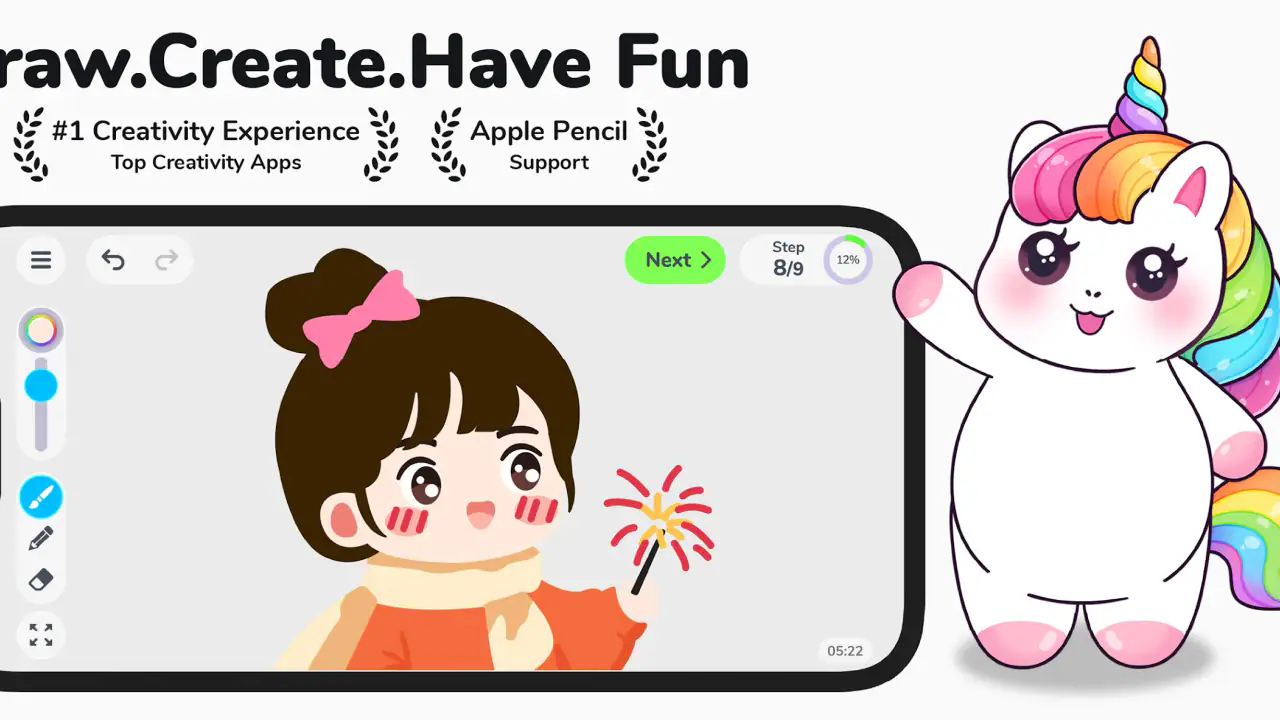
Some frustrations come from expectations rather than a technical fault. If you want to draw an original character from a completely empty canvas, a conventional sketching app will probably serve you better. DrawMee’s guided approach is its identity, not a limitation that can be solved by searching for a hidden professional mode. Likewise, if you need precise design tools for school, work, or client projects, you should choose software designed for editing and composition instead.
Touchscreen hardware can also shape the experience. Coloring small areas with a fingertip is naturally less precise than using a stylus, and a small phone display may make detailed artwork feel cramped. Before deciding that the guides are inaccurate, try rotating the device, cleaning the screen, or using a larger compatible display if one is available. These are general practical checks, but they matter because drawing apps depend heavily on touch accuracy.
Performance can be affected by the device itself as well. Closing other demanding apps, ensuring there is comfortable storage space, and restarting an older device are sensible steps before treating a brief slowdown as a defect in the artwork system. I would not promise that these actions solve every issue, but they are low-risk ways to distinguish a local device problem from a repeatable app problem.
Network conditions may also affect parts of an app that involve loading collections or purchase information. If one area takes longer than expected, I would check the connection and try again later rather than repeatedly pressing buttons. This is particularly important around purchases, where patience is safer than creating duplicate attempts. The app can still be enjoyable as a quiet drawing activity, but users should handle any transaction screen carefully and read the displayed details before confirming.
How it compares with the usual alternatives
Compared with a blank-canvas drawing app, DrawMee is easier to enter but less open-ended. A blank canvas gives me complete control over brushes, shapes, composition, and subject matter, yet it also demands that I supply the idea and the confidence. DrawMee gives me a starting structure, which is more useful when I want a short, relaxing session or need to rebuild basic hand control.
Compared with a traditional coloring book, it offers the convenience of carrying the activity on a phone or tablet and changing images without physical supplies. The trade-off is that digital coloring does not provide the same paper texture or the tactile feeling of pencils and markers. If the physical process is the part you love most, a printed book may remain more satisfying. If convenience and quick access matter more, the app has a clear advantage.
Compared with a professional illustration package, the difference is even sharper. Professional tools win for layers, precision, export workflows, and original artwork. DrawMee wins for approachability. I would choose it for a ten-minute break, a beginner’s first guided exercise, or a child who needs a simple creative activity. I would not choose it as the main tool for portfolio work, commercial design, or serious digital painting.
One less obvious trade-off is that guidance can help you practice color decisions while limiting experimentation. A beginner may learn to notice how neighboring areas work together, but the structure can also encourage staying inside the intended result. I would use it alongside a freer sketching tool if my goal were long-term artistic growth: guided pieces for confidence and repetition, open drawing for imagination and problem-solving.
Who will get the most from the free starting point
The app is a good match for someone who says, “I want to draw, but I do not know where to begin.” It is also suitable for people who enjoy calm, low-pressure activities and prefer a finished image over an intimidating empty page. Families can use it as a simple shared activity, while adults may appreciate it during a commute, a quiet evening, or a short break when they want something more focused than scrolling.
It is less suitable for users who dislike guided boundaries or want complete control over every mark. It may also disappoint anyone expecting a large professional toolkit simply because it belongs to the art category. The category covers many different kinds of apps, and this one is specifically closer to guided coloring practice than to a full studio.
The optional purchases deserve a deliberate decision. I would use the free portion long enough to learn whether I return to the app naturally. If I only open it once, purchasing more collections is unlikely to improve the experience. If I regularly finish the available artwork and still want more of the same style, the paid items may make sense, but I would still compare the cost of continued access with the value I personally get from repeated use.
My practical verdict after using its intended workflow
DrawMee succeeds when I let it be a calm, guided drawing companion instead of asking it to become a full illustration studio. Its strongest quality is the way it lowers the starting barrier: I can choose an artwork, follow the visual structure, and concentrate on color and completion rather than inventing an entire composition. That makes it especially approachable for beginners and casual users.
The limitations are equally clear. The guided format will not satisfy artists who need unrestricted drawing, and the distinction between free content and optional purchases means I would inspect each selection before assuming the full collection is included. Device compatibility, screen size, touch accuracy, and temporary loading problems can also affect the first impression, so basic setup checks are worthwhile.
For me, the best routine is simple: start with one free design, use a short session to test the guides, close and reopen the app calmly if something behaves oddly, and only consider an optional purchase after I know I will return. My recommendation is positive for relaxed guided practice, but selective for anyone seeking professional creative control. If that is the kind of drawing experience you want, DrawMee is an easy app to try; if your priority is original illustration, choose a more flexible drawing tool instead.
FAQs for DrawMee - Learn how to draw
What is DrawMee - Learn how to draw?
DrawMee - Learn how to draw is an educational drawing app designed to help beginners improve their sketching skills through guided lessons and step-by-step instructions. Instead of simply giving you a finished picture, it breaks drawings into manageable stages, making it easier to understand proportions, shapes, outlines, and details. It can be useful for children, casual learners, and anyone who wants a simple way to practice drawing on a mobile device.
Is DrawMee suitable for complete beginners?
Yes, DrawMee is mainly aimed at users who are starting to learn how to draw or who want to develop more confidence with basic techniques. The guided format makes lessons easier to follow than an unstructured blank canvas, while the progressive steps help you focus on one part of the image at a time. However, the experience may feel basic for advanced artists looking for professional tools, anatomy studies, or highly detailed instruction.
What can I learn or draw with DrawMee?
The available lessons generally focus on learning how to reproduce different drawings by following visual stages, beginning with simple shapes and gradually adding outlines and details. Depending on the version and content provided, users may find subjects such as characters, animals, objects, or other familiar illustrations. The app is best viewed as a practice tool for observation and hand control rather than a complete art course covering every drawing style.
Does DrawMee require an internet connection or offer in-app purchases?
Some DrawMee features and lesson content may work without a constant internet connection, but this can depend on the specific version installed and how the app delivers its drawing guides. Users should also check the current store listing for advertisements, premium lessons, subscriptions, or optional in-app purchases before downloading. App pricing and availability can change, so reviewing the permissions and purchase information on Google Play or the App Store is recommended.
Is DrawMee safe and appropriate for children?
DrawMee can be appropriate for children because it encourages a creative, non-competitive activity and presents drawing in an accessible format. Nevertheless, parents should review the app’s current privacy policy, advertising practices, permissions, and age rating before allowing younger children to use it. If the app includes external links, purchases, or advertisements, parental supervision is advisable, especially when the device is shared or connected to a payment account.
Pros
- Simple lessons make drawing approachable for complete beginners.
- Step-by-step guidance helps users practice at their own pace.
- Useful for improving observation and basic sketching skills.
- Short exercises fit easily into daily practice sessions.
- Suitable for children
- teens
- and casual adult learners.
Cons
- Advanced artists may find the lessons too basic over time.
- Some content or features may require in-app purchases.
- Limited feedback can make it hard to correct drawing mistakes.
- Progress tracking may feel minimal for users seeking structured goals.
- A stylus or tablet can improve the experience on smaller screens.


